Program Outcome: Web Developer/Designer
When I entered the Web Designer/Developer program, I had a basic understanding of web design—mostly limited to HTML and CSS with little insight into how design choices impacted user experience. I knew how to build a static page, but not how to design for functionality or accessibility.
Throughout the program, I learned how to approach web design with the user in mind. I gained experience with responsive design, visual hierarchy, user interaction patterns, and accessibility standards.
I have demonstrated this outcome in two major internship projects I have recently started working on:
Whisky Wednesday: I applied UX principles to design an engaging homepage with animated elements, a bold hero section, and a dark gold-themed aesthetic. The goal was to reflect the personality of the community while making it easy to navigate features like the host tracker and whisky database.
Fidelity Properties LLC: For this real-world rental site, I focused on usability and clarity. I organized the content in a way that made it easy for users to browse rental units, download or submit applications, and contact the company. I also ensured that tenants could access important forms easily, which contributes directly to a positive user experience.
These projects challenged me to think beyond code and really consider how people interact with the web. They’ve helped me grow as a designer and taught me how to bridge the gap between visual design and functionality.
Implement a Front-End User Interface
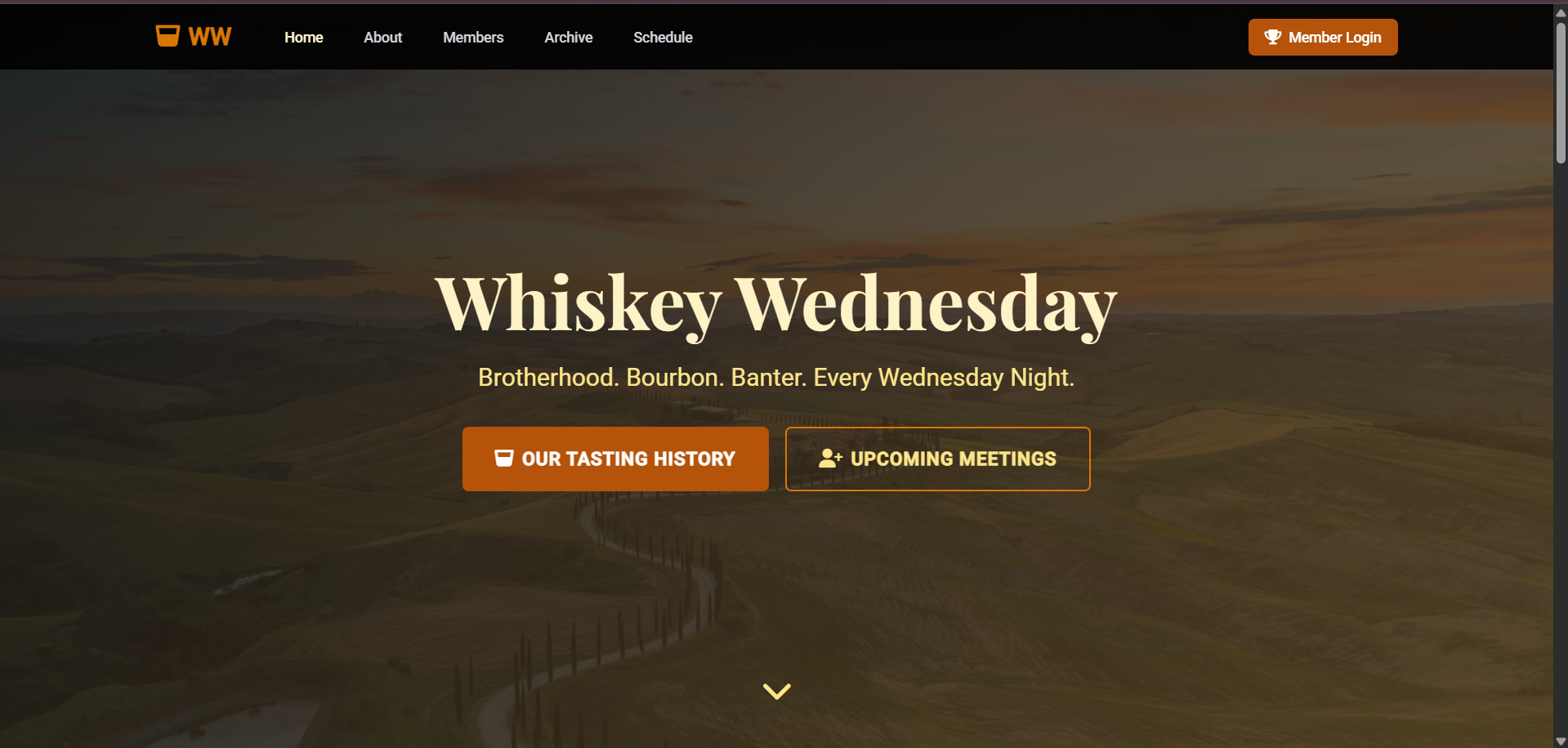
Throughout my time in the Web Designer/Developer program, I’ve gained hands-on experience implementing front-end user interfaces that are both functional and visually engaging. My projects, such as Whisky Wednesday and Fidelity Properties LLC, gave me real-world opportunities to plan, design, and build interfaces that reflect user needs.
For Whisky Wednesday, I created a bold, stylized homepage with animated elements and an intuitive layout. I implemented features like a schedule viewer, member profiles, and a whisky archive—each with their own user-friendly design and interactivity. These elements were built using HTML, CSS, and JavaScript to create an interface that members could easily engage with.
On the Fidelity Properties project, I focused on a clean and accessible layout where users could browse rental units, submit applications, and contact the company. This involved creating buttons, forms, and navigation that made sense for users with different levels of tech familiarity.
These projects helped me apply industry practices for building intuitive front-end interfaces. I now feel confident in designing responsive layouts, structuring content for readability, and using JavaScript to enhance interactivity—all while keeping the end-user in mind.
Implement a Back-End Web Application
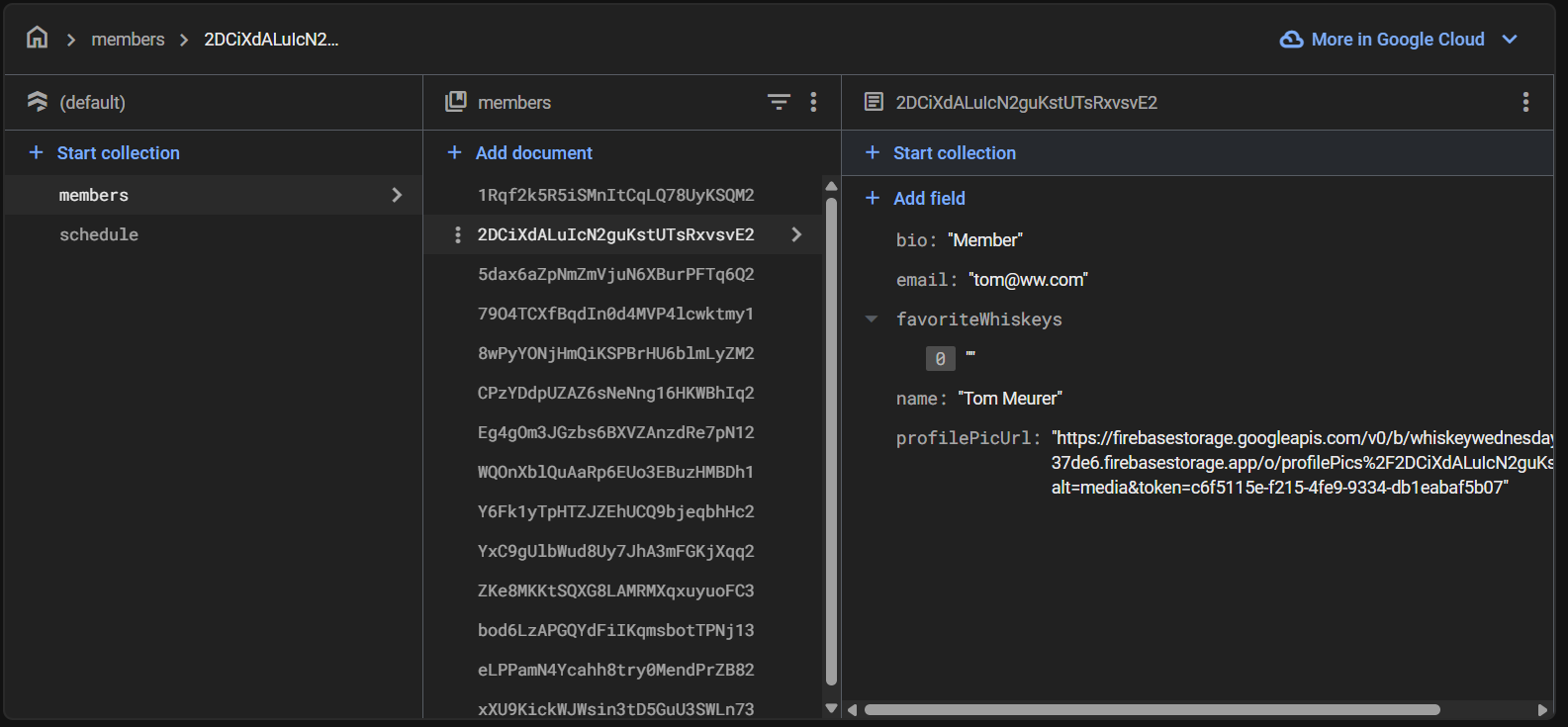
As part of my internship and program experience, I implemented back-end functionality that connects user data, authentication, and database operations in meaningful ways. On both the Whisky Wednesday and Fidelity Properties LLC projects, I had the opportunity to integrate back-end systems using tools like Firebase and form handling via PHP.
For Whisky Wednesday, I used Firebase Authentication and Firestore to create a secure members-only portal where authenticated users could log in, update their profile information, and modify shared content such as the event schedule and whisky reviews. This involved setting up read/write permissions, managing user sessions, and ensuring that data updates reflected dynamically on the front-end—essentially bridging the UI with cloud-based back-end storage.
On Fidelity Properties, I implemented a back-end form system where potential tenants could submit applications online using a PHP form that captured user data and either emailed it or stored it for review. This simplified the application process and replaced the need for printing or scanning paper forms.
These experiences helped me better understand client-server relationships, data validation, and real-time updates in modern web development. I now feel confident using cloud-based back-end services and building applications that go beyond static pages.
Apply Customer Experience Guidelines
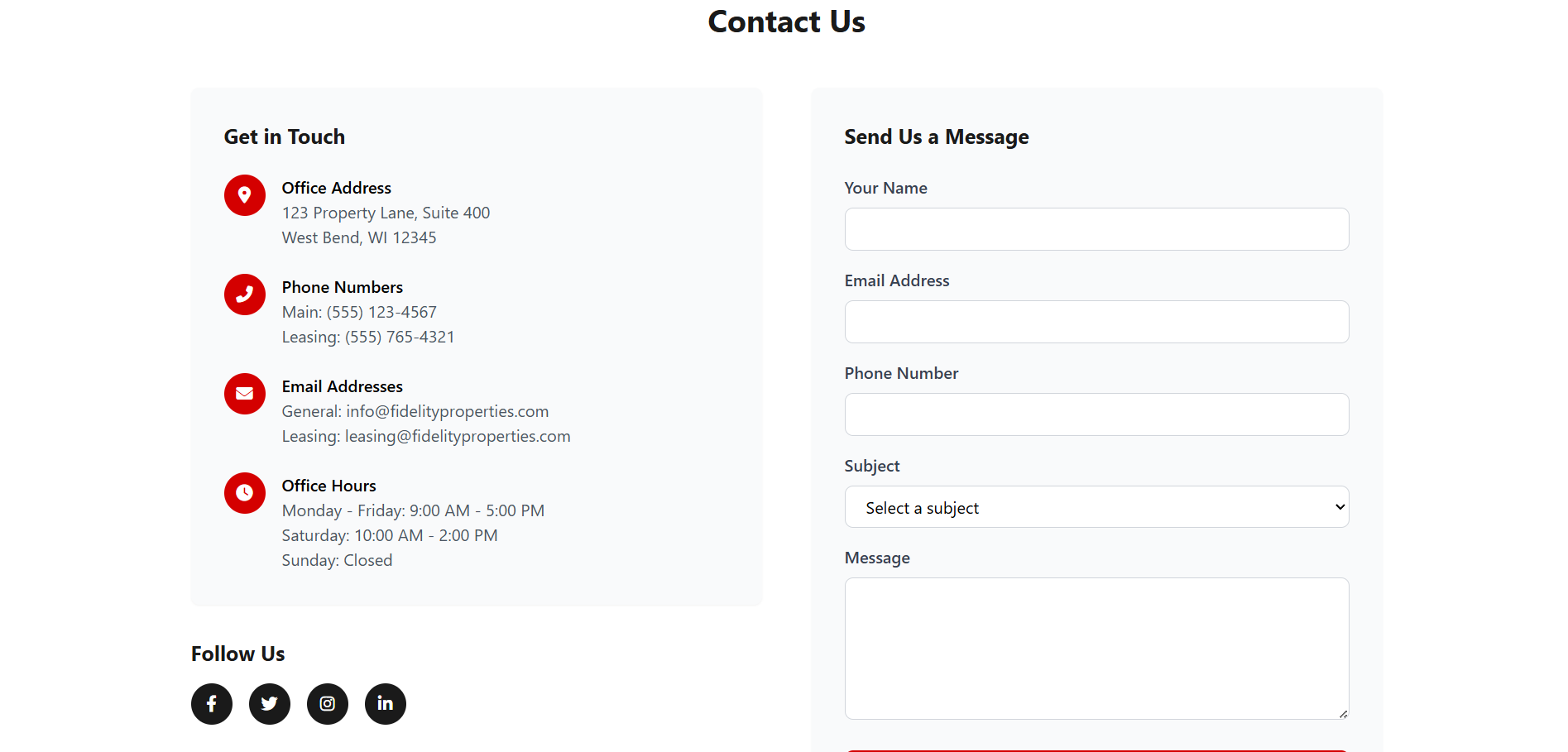
A major focus of my internship projects was ensuring that the websites I built provided a smooth and positive experience for end users. By applying customer experience (CX) guidelines, I aimed to make every interaction clear, intuitive, and efficient.
On the Fidelity Properties LLC site, I structured the layout so that users could easily browse available rentals, download or submit an application, and contact the company—all within a few clicks. I reduced visual clutter, made call-to-action buttons prominent, and ensured forms were easy to understand. I also made sure the site worked well on mobile devices, which is essential for accessibility and convenience.
With Whisky Wednesday, I kept the audience in mind—a private social group of older adults—and prioritized readability, simple navigation, and large, tappable elements. I also included helpful features like a member-edited schedule, menu planner, and whisky archive, ensuring that members could easily find and interact with site content.
These experiences taught me that applying customer experience guidelines goes beyond good design—it’s about anticipating user needs and removing friction wherever possible. My work now reflects a user-first approach, balancing design creativity with practical usability.
Integrate Web Data Technologies
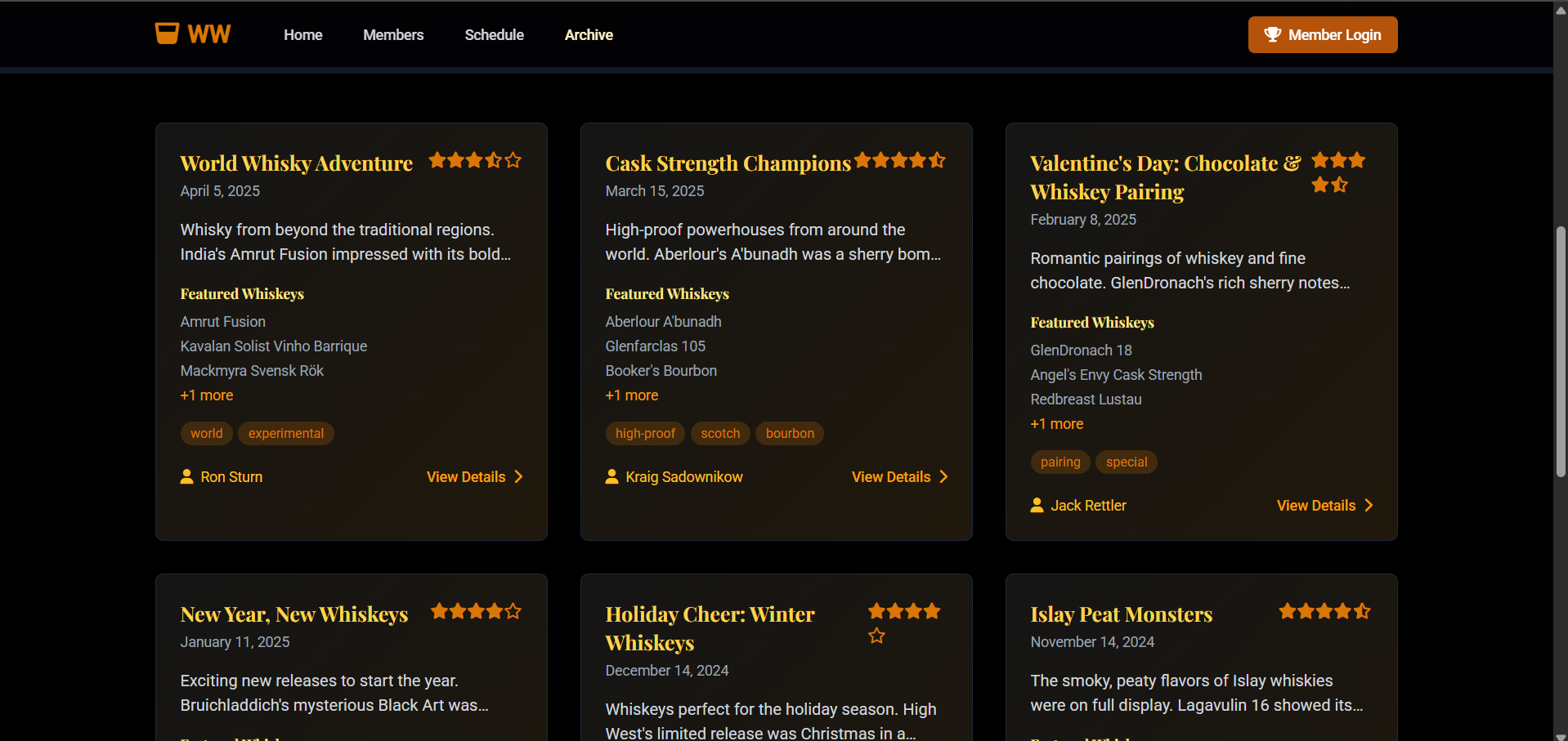
Throughout my projects, I’ve gained experience integrating web data technologies to store, retrieve, and display dynamic content in real-time. Working on Whisky Wednesday and Fidelity Properties LLC, I used tools like Firebase Firestore, Firebase Storage, and JSON to manage and present structured data to users.
For Whisky Wednesday, I created a custom schedule system and whisky archive that pulls in data from JSON files and Firestore documents. Users can log in, edit event details, and see updates reflected instantly across the site. I also enabled image upload and retrieval using Firebase Storage, allowing members to attach photos to their profiles and menus.
In the Fidelity Properties project, I handled application form submissions through backend scripting and used structured data principles to prepare content like rental listings in a clean, easily expandable format.
These experiences taught me how to connect front-end interfaces to real-time data sources, how to structure and format data for performance and usability, and how to keep applications flexible and updatable. Integrating web data technologies has allowed me to build projects that go beyond static content and react to user input and database changes.
Build Web-Based Software Applications
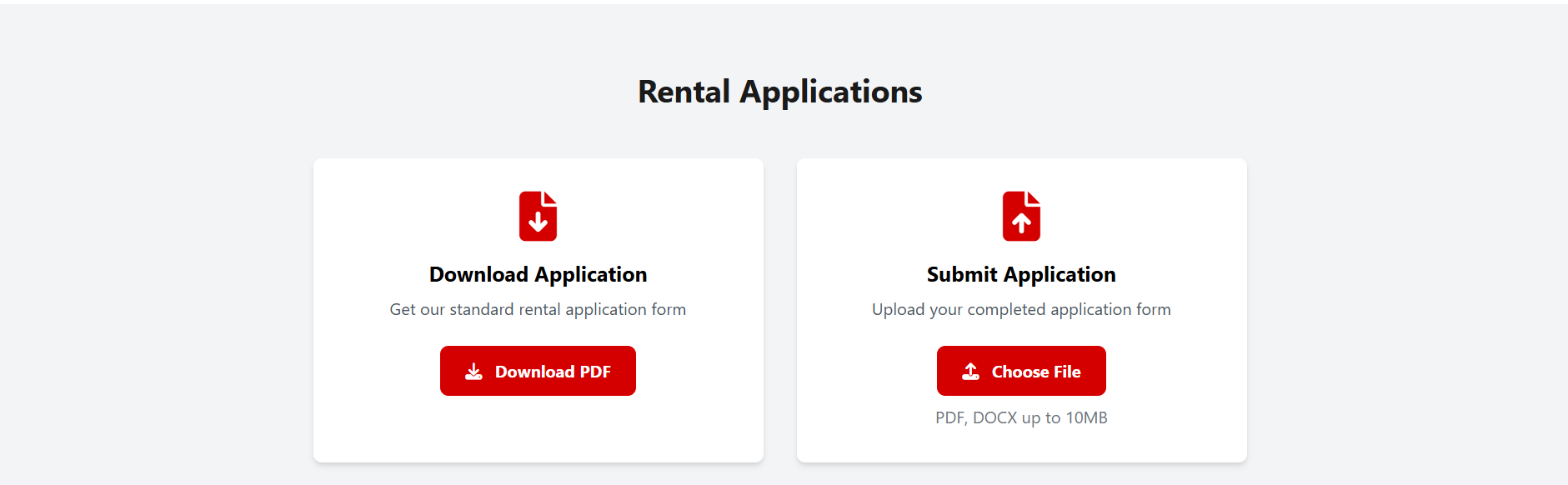
Through my capstone and internship projects, I’ve had the opportunity to build full-featured web-based software applications that go beyond basic websites. These applications include interactive features, user authentication, dynamic content management, and responsive design—built using real-world tools and workflows.
On Whisky Wednesday, I created a fully functional member portal where users could log in, edit their profile, manage the event schedule, and browse an archive of whiskies. I implemented authentication using Firebase Auth, stored and retrieved user data with Firestore, and used JavaScript to build an interface that responds to changes in real-time. This turned a static website into a collaborative platform for a private community.
For Fidelity Properties, I built a rental management application that allows potential tenants to browse available units, download or fill out an application form, and submit it online. I also included features like a toggle system for unit availability, downloadable PDFs, and a backend structure for future scalability.
These projects taught me how to approach web apps with a software mindset—thinking in terms of workflows, user roles, and maintainable codebases. I now have experience designing, developing, and deploying web-based applications that solve real problems for real users.
Develop Project Documents
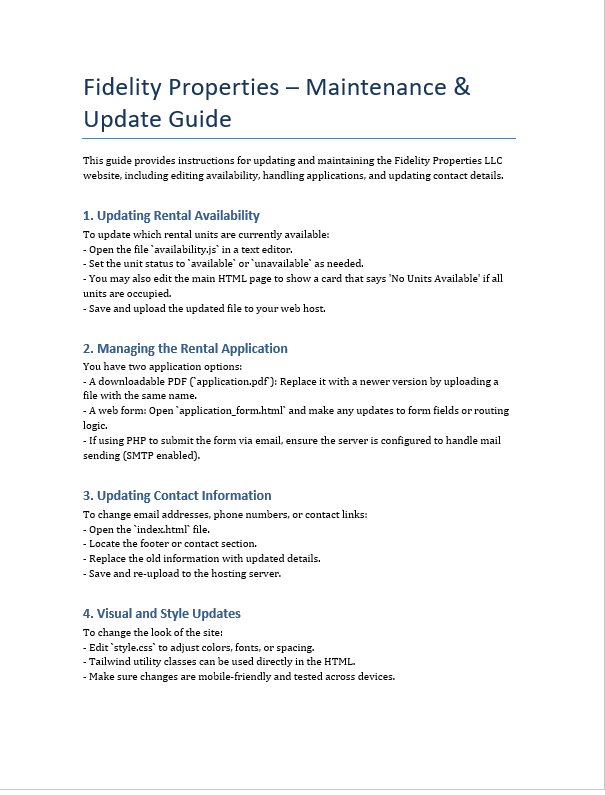
Throughout the development of my internship projects, I created and maintained project documentation to support planning, collaboration, and future updates. These documents helped define scope, guide progress, and provide clear communication with stakeholders.
For Whisky Wednesday, I created a structured content plan, project scope outline, and technical documentation that detailed how user authentication, schedule editing, and profile management would function using Firebase. I also documented how to update the whisky archive, manage Firestore data, and troubleshoot common issues—important for long-term site maintenance.
On Fidelity Properties, I produced client-facing documentation to describe the site features, how unit availability could be updated, and how application forms were handled. I also included notes on expandability, file organization, and hosting details to assist the client with future edits or handoff to another developer.
Creating these documents has made me more organized and prepared to work on professional teams. I’ve learned the value of documentation not just for tracking my own progress, but for making sure others can understand and build on my work.